Sustainable Eating Series || Local Food




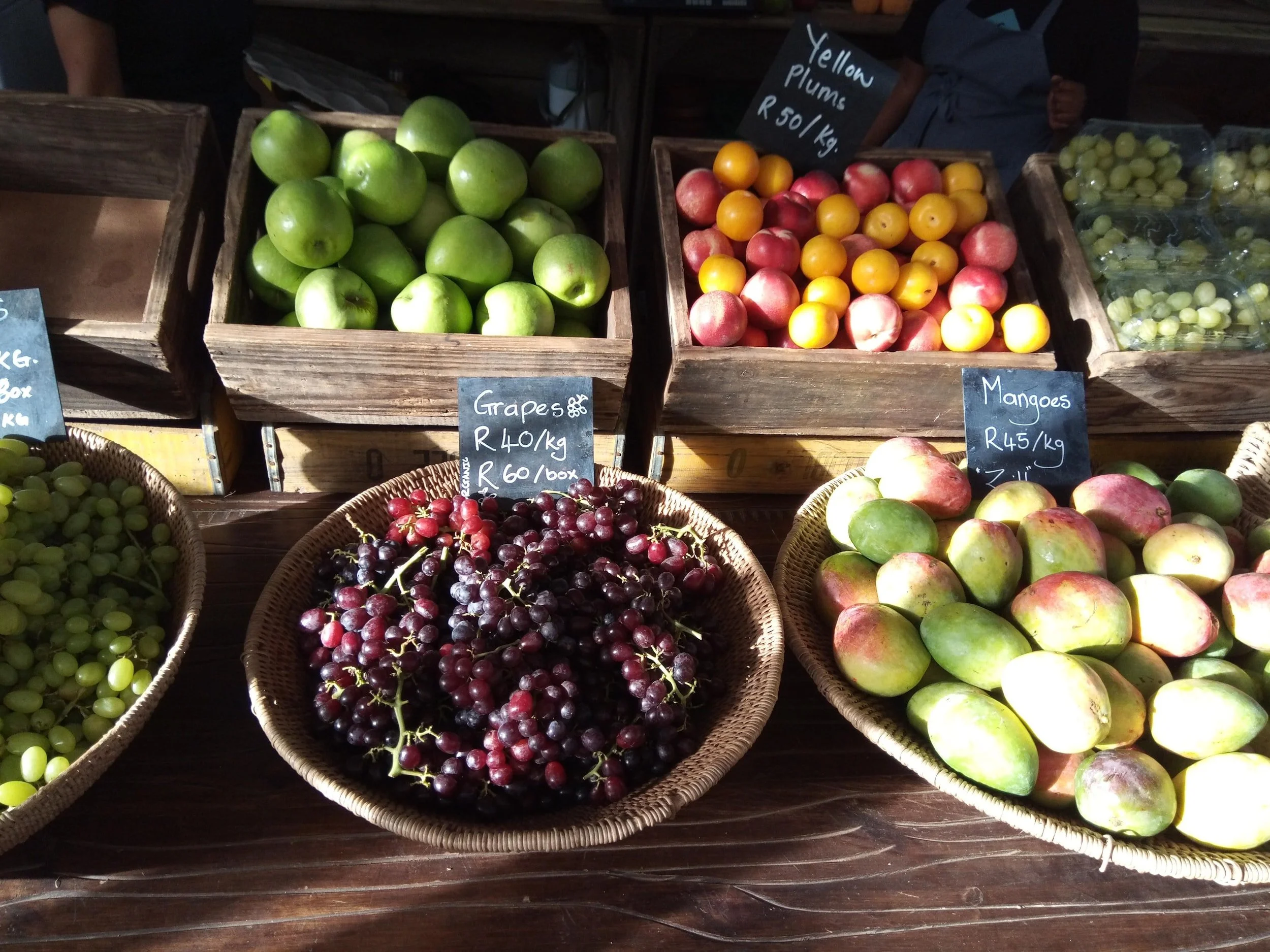
What is “Local Food”?
In recent years, the idea of consuming "local food" has gained popularity, but it can still be unclear what this term means. Simply put, local food refers to food that is produced and consumed within a relatively small geographic area, typically within 100 miles or less. This can include a variety of agricultural products, such as fruits, vegetables, meat, dairy, grains, and seafood. Choosing to eat locally grown food has a multitude of benefits for our health, environment, and local communities.
Our health.
One of the key benefits of consuming local food is that these foods are more nutrient dense than foods that are grown elsewhere. Research conducted at Montclair State University has shown that the vitamin C content in broccoli decreases by 50% when it is imported, as opposed to being locally harvested. Similarly, spinach that is stored at room temperature for 24 hours loses between 50-90% of its vitamin C content.
Vitamins C, B, and E are all vital antioxidants that protect against disease by attacking free radicals, which can cause oxidative stress and damage our cells, leading to conditions such as cancer and heart disease. By choosing to consume vegetables grown locally, we can be sure that we are getting the full nutrient potential of the produce. This is because local food is often picked and processed at its peak of ripeness, which means it has more nutrients than food that is picked before it is ripe and then stored for a long time. Eating locally-grown produce also provides access to a wider variety of nutrient-rich options. Locally grown fruits and vegetables often include more diverse varieties that may not be suitable for mass markets due to their delicate nature or unique flavor profiles.
For instance, instead of the usual iceberg lettuce, one might find red-leaf lettuce or other nutrient-rich leafy greens at a local farmers' market. Similarly, purple fingerling potatoes may be available in place of the more common russet variety. While these options may not be as well-known, they offer a denser nutritional profile and are a healthier choice for consumption. By choosing to eat locally, individuals can enjoy a greater variety of fresh, nutrient-rich produce while supporting their local community.
The environment.
The benefits of consuming locally grown products extend beyond personal health. It is also better for the environment. The practice of "All-Season" grazing, or the demand for year-round availability of certain foods, has had detrimental effects on the environment. For instance, in California, tomato season is in June for the northern region and July for the southern region, but at larger chain stores, tomatoes would be available year-round. Foods such as tomatoes that are out of season are likely flown in from elsewhere, which increases the time and distance from farm to fork and has a higher carbon footprint.
According to a report from the WWF, the food system is one of the primary drivers of global greenhouse gas emissions, accounting for roughly 27% of total emissions. About one-third of these emissions come from processing, transportation, and packaging. Choosing to consume locally produced, in-season foods is linked to fewer emissions, and is, therefore, better for the environment. A plant-based diet is typically thought of as having lower emissions, but if a plant-based diet included lots of imported and out-of-season produce, this would push emissions higher. Therefore, it is better to select locally produced-varieties.
Our communities.
In addition to personal health and environmental benefits, choosing to purchase and consume locally-grown food also benefits our finances and communities. In-season produce is often more affordable than its mass-market counterparts for consumers. The transportation and refrigeration required to move mass-produced goods long distances consume vast amounts of energy, resulting in higher fuel costs. These costs are often reflected in the price of goods sold. Whereas foods grown in a radius of 100 miles or less that do not travel long distances have lower transportation costs if any at all.
Furthermore, by supporting local farmers and businesses, consumers can strengthen local economies, create jobs, and provide greater access to fresh, delicious food. When consumers choose to buy from farmers' markets, community-supported agriculture (CSA) programs, and other direct-to-consumer channels, these food dollars stay in the local community. This is especially important when considering that in the United States, more than 25% of grocery spending is at Walmart, with little of that money actually reaching the farmers or laborers who grew the food.
What can we do?
While it may not always be possible to procure locally grown food, there are steps we can take to make the most of the resources available to us. This includes buying organic, locally grown food whenever possible and planting a small backyard or kitchen garden. By doing so, we can help ensure that the food we eat is better for our health, our communities, and our planet.
